
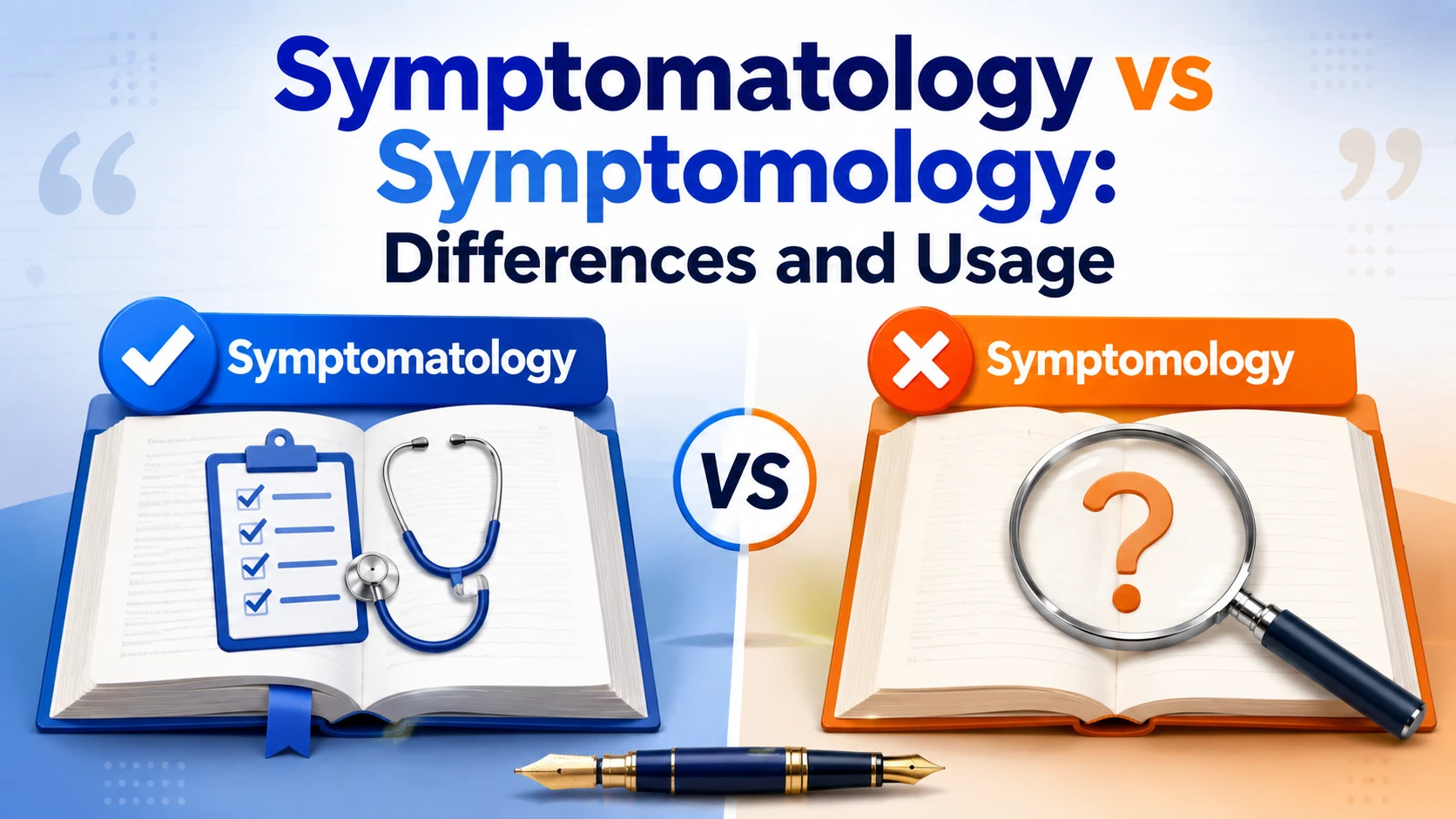
Symptomatology vs Symptomology is a comparison that often confuses students, healthcare professionals in training, medical writers, and even experienced researchers. At first glance, the two words appear interchangeable because they describe symptoms. However, only one term is widely accepted in modern medical literature and professional communication. Choosing the correct word matters because medical terminology relies on precision. A seemingly small language mistake can affect the credibility of an academic paper, research article, or clinical document.
Medical vocabulary has evolved over centuries, borrowing heavily from Greek and Latin roots while adapting to modern scientific standards. That evolution explains why some words survive, others disappear, and a few continue to circulate despite not being the preferred choice. Symptomatology has become the established term in medicine because it refers to the systematic study, collection, and interpretation of symptoms associated with diseases. Symptomology, meanwhile, still appears in some publications and online discussions, leading many readers to wonder whether it is an accepted alternative or simply an outdated variation.
This guide explains the difference in plain English without oversimplifying the science. You’ll learn what each word means, which one medical professionals actually use, why the confusion persists, and how to choose the correct term in academic writing, healthcare documentation, and everyday communication. Along the way, you’ll also see practical examples, comparison tables, and expert tips that make remembering the correct usage much easier.
Quick Answer: Is It Symptomatology or Symptomology?
The short answer is simple:
- Symptomatology is the standard medical term used by healthcare professionals, researchers, educators, and scientific journals.
- Symptomology exists in some dictionaries and informal sources, but it is not the preferred term in modern medical communication.
If your goal is accuracy, professionalism, or academic credibility, choose symptomatology.
The Correct Medical Term at a Glance
Healthcare relies on standardized terminology so that professionals around the world interpret information consistently. Medical schools, peer-reviewed journals, and clinical references overwhelmingly use symptomatology because it conveys more than a simple list of symptoms. It describes the overall pattern, characteristics, and clinical interpretation of symptoms associated with a disease or condition.
For example:
- ✔ The patient’s symptomatology suggested an autoimmune disorder.
- ✔ Researchers analyzed the symptomatology of long COVID patients.
These examples describe an organized evaluation of symptoms rather than merely naming individual complaints.
Why Many People Mistakenly Use “Symptomology”
The confusion usually comes from English word patterns.
Many scientific disciplines end with -ology, including:
- Biology
- Psychology
- Neurology
- Oncology
- Cardiology
Because these words are so familiar, many people naturally assume symptomology follows the same naming convention.
In reality, symptomatology developed differently. The suffix -atology became established through medical terminology to describe the body of symptoms associated with diseases rather than a standalone field ending in -ology.
This difference isn’t obvious unless you’ve studied medical language, making the mistake understandable.
When Each Term Appears in Real-World Writing
You may encounter both words, but they do not carry the same authority.
| Context | Symptomatology | Symptomology |
| Medical journals | ✔ Standard | ✖ Rare |
| Clinical documentation | ✔ Preferred | ✖ Generally avoided |
| Medical textbooks | ✔ Standard | ✖ Uncommon |
| Student assignments | ✔ Recommended | ✖ May be corrected |
| Informal blogs | ✔ Common | ✔ Occasionally used |
| Social media | ✔ Seen | ✔ Frequently seen |
Expert recommendation: Whenever accuracy matters, use symptomatology.
Symptomatology vs Symptomology: What’s the Difference?
Although these words are closely related, they are not equal in professional usage.
The biggest distinction is acceptance rather than meaning. Both refer to symptoms, but symptomatology has become the recognized technical term in medicine. Symptomology survives mainly because it sounds logical to English speakers and occasionally appears in informal writing.
Think of it as the difference between a word that is professionally preferred and one that is occasionally encountered but generally discouraged.
Side-by-Side Comparison
| Feature | Symptomatology | Symptomology |
| Meaning | Study or collection of symptoms associated with diseases | Intended to mean the same thing |
| Medical acceptance | Widely accepted | Less accepted |
| Academic writing | Recommended | Usually discouraged |
| Clinical documentation | Standard | Rare |
| Research publications | Frequently used | Infrequent |
| Professional credibility | High | Lower |
Meaning
Symptomatology refers to the complete pattern of symptoms observed in a disease, disorder, or patient population. It considers not only which symptoms exist but also their severity, progression, frequency, and relationship to one another.
For example, the symptomatology of influenza includes fever, muscle aches, fatigue, cough, and headache. A physician studies how these symptoms appear together rather than treating each complaint as an isolated event.
Correctness
In professional healthcare communication, symptomatology is considered the correct choice because it aligns with accepted medical terminology used in education, research, and patient care.
Symptomology isn’t always labeled incorrect, but many editors, professors, and journal reviewers replace it with symptomatology for consistency and accuracy.
Medical Acceptance
Medical terminology emphasizes consistency because patient safety depends on clear communication.
Using standardized language helps:
- Reduce misunderstanding.
- Improve communication between healthcare teams.
- Maintain consistency in research.
- Support accurate medical education.
- Make scientific literature easier to interpret internationally.
That’s one reason professional organizations and academic publications overwhelmingly favor symptomatology.
Examples in Context
Correct examples:
- The patient’s neurological symptomatology changed over several weeks.
- Researchers compared the symptomatology of multiple viral infections.
- The physician documented the symptomatology before ordering diagnostic tests.
- Understanding disease symptomatology improves differential diagnosis.
Less-preferred examples:
- The symptomology of diabetes includes excessive thirst.
- Researchers investigated COVID symptomology.
Although readers will usually understand these sentences, replacing symptomology with symptomatology makes them consistent with professional medical writing.
What Does Symptomatology Mean?
Understanding the definition helps explain why medical experts continue to favor this term.
Simply put, symptomatology is the systematic description, analysis, and interpretation of the symptoms associated with a disease or medical condition. It involves examining how symptoms appear, interact, evolve, and guide diagnosis.
Unlike an ordinary list of symptoms, symptomatology focuses on patterns that help healthcare professionals distinguish one condition from another.
Definition in Medicine
In clinical medicine, symptomatology refers to the overall symptom profile of an illness.
A physician rarely evaluates symptoms one by one. Instead, they consider questions such as:
- Which symptom appeared first?
- Which symptoms occur together?
- How severe are they?
- Have they changed over time?
- Do they match a known disease pattern?
This broader perspective is what makes symptomatology valuable during diagnosis.
Origin and Word Formation
The word symptomatology is derived from Greek roots related to symptoms and the study or systematic description of them.
Over time, physicians adopted the term to represent a structured approach to symptom analysis rather than simply naming individual patient complaints.
Its long history within medical education explains why it remains the preferred choice despite the existence of symptomology.
What Healthcare Professionals Mean by Symptomatology
When clinicians discuss a patient’s symptomatology, they are referring to the complete clinical picture presented by symptoms.
For instance, a patient reporting fatigue alone provides very limited information. However, fatigue accompanied by fever, night sweats, weight loss, and swollen lymph nodes creates a distinct symptomatology that may point toward a specific group of diseases.
Recognizing these patterns allows physicians to narrow possible diagnoses before ordering laboratory tests or imaging studies.
Why It Refers to More Than Just a List of Symptoms
A common beginner’s mistake is assuming symptomatology simply means “symptoms.”
It actually includes several important elements:
- Symptom combinations
- Severity of each symptom
- Timing and duration
- Progression over time
- Relationship between symptoms
- Clinical significance
- Diagnostic value
Two patients may report headaches, yet their overall symptomatology can differ dramatically depending on accompanying symptoms, medical history, and disease progression.
Understanding that distinction helps explain why symptomatology remains one of the foundational concepts in clinical medicine rather than just another medical vocabulary word.
When to Use Symptomatology
Knowing that symptomatology is the preferred term is only part of the answer. The next question is where it belongs. In professional settings, the word appears whenever someone is describing or analyzing the pattern of symptoms associated with a disease, condition, or group of patients.
If you’re writing a research paper, preparing a case report, or documenting patient information, symptomatology is the safest and most accurate choice.
Medical Reports
Clinical reports require precise language because they become part of a patient’s medical record. Physicians often describe symptomatology to summarize how an illness presents instead of listing every symptom individually.
For example:
- The patient’s respiratory symptomatology worsened over 48 hours.
- Neurological symptomatology remained stable throughout hospitalization.
This wording provides a concise overview while allowing healthcare professionals to understand the patient’s overall clinical presentation.
Best practice: Use symptomatology when discussing symptom patterns rather than isolated complaints.
Clinical Documentation
Healthcare providers rely on standardized terminology to reduce ambiguity. Whether documenting a routine examination or a complex medical condition, symptomatology helps communicate findings consistently.
Examples include:
- Admission notes
- Discharge summaries
- Consultation reports
- Electronic health records
- Specialist referrals
Because multiple clinicians may review the same record, using accepted terminology improves continuity of care.
Research Papers
Medical researchers frequently compare the symptomatology of different diseases, treatments, or patient populations.
Examples include studies that examine:
- Differences between viral infections
- Early versus late disease presentation
- Symptoms across age groups
- Rare manifestations of common illnesses
- Long-term effects following recovery
Using standardized terminology also makes research easier to compare across institutions and countries.
Medical Education
Students encounter symptomatology throughout medical school, nursing education, pharmacy programs, and other health sciences.
Instructors often ask learners to describe:
- Disease symptomatology
- Typical versus atypical presentations
- Progression of symptoms
- Diagnostic implications
Learning the correct term early helps students develop professional communication habits.
Scientific Journals
Peer-reviewed journals generally follow strict editorial standards. Editors often replace nonstandard medical terms with accepted terminology before publication.
For authors, using symptomatology from the beginning:
- Demonstrates familiarity with medical language.
- Reduces editing during peer review.
- Improves consistency across scientific writing.
- Aligns with established publishing conventions.
Expert Tip
If your audience includes healthcare professionals, educators, researchers, or students, use symptomatology unless a publication specifically recommends otherwise.
Should You Ever Use Symptomology?
This question has a more nuanced answer than many people expect.
While symptomology appears in some dictionaries and online sources, it is generally viewed as a less-preferred or nonstandard alternative in professional medicine. That doesn’t necessarily mean readers will fail to understand it, but using it can make your writing appear less polished.
Academic and Professional Recommendations
Most universities, medical schools, and healthcare publications encourage writers to use terminology that reflects current professional standards.
That means choosing:
- Symptomatology ✔
- Symptomology ✖ (unless quoting or preserving original wording)
Editors frequently revise manuscripts to replace the latter with the former because consistency is essential in scientific communication.
Situations Where Editors May Replace It
Professional editors often standardize terminology in:
- Medical textbooks
- Clinical guidelines
- Journal articles
- Continuing education materials
- Government health publications
Even when symptomology is technically understandable, replacing it with symptomatology eliminates potential questions about correctness.
How Different Audiences Perceive the Term
Different readers respond differently to terminology.
| Audience | Preferred Choice | Why It Matters |
| Physicians | Symptomatology | Matches professional standards |
| Researchers | Symptomatology | Consistent with scientific literature |
| Medical students | Symptomatology | Reinforces accepted terminology |
| General readers | Usually symptomatology | More authoritative in educational content |
| Informal online communities | Either may appear | Accuracy standards vary |
For public-facing content, choosing the professional term also builds reader trust.
Why Symptomology Causes Confusion
One reason this topic generates so many searches is that symptomology sounds perfectly reasonable. English speakers naturally recognize hundreds of words ending in -ology, so it’s easy to assume this one follows the same pattern.
However, language and medical terminology don’t always evolve logically.
The Influence of Similar “-ology” Words
Many scientific disciplines use the -ology ending:
- Biology
- Dermatology
- Pathology
- Immunology
- Oncology
- Radiology
Because these words are familiar, people often create symptomology by analogy.
This process is common in language and explains why certain nonstandard forms gain popularity even without professional endorsement.
Common Assumptions Made by English Speakers
Many first-time learners assume:
- Every medical subject ends with -ology.
- Longer words can be simplified.
- Both spellings are officially interchangeable.
- Usage frequency equals correctness.
These assumptions seem logical but don’t reflect current medical conventions.
Misspellings Versus Accepted Variants
Not every uncommon spelling is automatically a misspelling.
Some words have accepted regional variants, while others develop informal alternatives through common usage.
With symptomology, opinions differ among dictionaries and style guides. Some recognize it as a variant, while many medical editors still discourage its use because symptomatology has long been the established professional standard.
The practical takeaway remains the same:
- If you’re writing academically or professionally, use symptomatology.
- If you encounter symptomology, understand that readers will likely recognize it, but it may not meet editorial expectations.
Symptomatology in Clinical Practice
Healthcare professionals rarely diagnose diseases based on a single symptom. Instead, they evaluate the patient’s complete symptomatology to identify patterns that point toward specific conditions.
This broader perspective helps distinguish illnesses that initially appear similar.
How Clinicians Evaluate Symptom Patterns
A physician begins by gathering detailed information, including:
- Presenting symptoms
- Onset
- Duration
- Severity
- Frequency
- Triggering factors
- Associated complaints
These details help transform isolated observations into meaningful clinical information.
For example, chest pain alone provides limited insight. Chest pain accompanied by shortness of breath, sweating, nausea, and pain radiating to the left arm creates a symptom pattern that warrants urgent evaluation.
The Role of Symptomatology in Diagnosis
Symptomatology helps physicians narrow a large list of possible diagnoses before ordering additional tests.
A systematic evaluation allows clinicians to:
- Recognize common disease patterns.
- Identify rare presentations.
- Prioritize urgent conditions.
- Decide which diagnostic tests are appropriate.
- Monitor disease progression.
Rather than replacing diagnostic testing, symptomatology guides the diagnostic process.
Why Symptomatology Alone Cannot Confirm a Disease
One important limitation is that many illnesses share similar symptoms.
For example:
| Symptom | Possible Conditions |
| Fever | Influenza, pneumonia, malaria, COVID-19, bacterial infection |
| Headache | Migraine, dehydration, meningitis, sinus infection, tension headache |
| Fatigue | Anemia, thyroid disease, depression, diabetes, viral illness |
| Chest pain | Heart attack, acid reflux, anxiety, muscle strain, pulmonary embolism |
The same symptom may appear in dozens of unrelated diseases.
That is why clinicians avoid diagnosing patients solely on symptomatology.
Combining Symptoms with Signs, History, and Testing
Professional diagnosis integrates several sources of information.
A physician considers:
- Symptoms reported by the patient.
- Clinical signs observed during examination.
- Medical history and family history.
- Medication use.
- Laboratory testing.
- Imaging studies.
- Risk factors.
- Response to treatment.
This comprehensive approach reduces diagnostic errors and leads to more accurate treatment decisions.
Clinical Insight
Symptomatology is best viewed as the starting point of diagnosis rather than the final answer. It helps clinicians ask the right questions, choose appropriate investigations, and interpret findings within the broader context of the patient’s health.
Symptomatology vs Symptoms vs Signs
These three terms are closely related, but they are not interchangeable. Understanding the distinction is essential for anyone studying medicine, writing healthcare content, or trying to interpret medical information accurately.
A common beginner’s mistake is assuming that symptomatology simply means “symptoms.” In reality, it describes the broader clinical picture created by those symptoms.
What Is a Symptom?
A symptom is a change in health that the patient experiences and reports. Because symptoms are subjective, they cannot be measured directly by another person without the patient’s description.
Common symptoms include:
- Headache
- Nausea
- Fatigue
- Dizziness
- Pain
- Shortness of breath
- Blurred vision
For example, a patient may say:
“I’ve had severe headaches for three days.”
The headache is a symptom because it is based on the patient’s personal experience.
What Is a Clinical Sign?
A sign is something a healthcare professional can observe, measure, or verify during an examination or diagnostic test.
Examples include:
- Fever measured with a thermometer
- Elevated blood pressure
- Skin rash
- Heart murmur
- Low oxygen saturation
- Swollen lymph nodes
- Abnormal laboratory results
Unlike symptoms, signs provide objective evidence that supports a diagnosis.
What Is Symptomatology?
Symptomatology refers to the overall pattern, combination, progression, and interpretation of symptoms associated with a disease or patient.
Instead of focusing on one complaint, clinicians evaluate questions such as:
- Which symptoms appeared first?
- Which symptoms occur together?
- How severe are they?
- Are they improving or worsening?
- Do they match a known disease pattern?
That broader analysis is what distinguishes symptomatology from individual symptoms.
Comparison Table
| Term | Definition | Who Identifies It? | Example |
| Symptom | A subjective experience reported by the patient | Patient | Chest pain, dizziness |
| Sign | An objective finding observed or measured | Healthcare professional | Fever, high blood pressure |
| Symptomatology | The complete pattern and analysis of symptoms | Healthcare professionals and researchers | The overall symptom profile of influenza |
Remember: Symptoms describe what a patient feels, signs describe what clinicians observe, and symptomatology describes how those symptoms fit together to form a meaningful clinical picture.
Real Examples of Symptomatology in Different Medical Fields
Although the concept is universal, symptomatology varies significantly across medical specialties. The same disease can present differently depending on the patient’s age, medical history, and overall health.
Infectious Diseases
In infectious disease medicine, clinicians look for symptom clusters that suggest bacterial, viral, fungal, or parasitic infections.
For example, influenza commonly presents with:
- Sudden fever
- Muscle aches
- Chills
- Fatigue
- Dry cough
- Headache
This combination is more informative than any single symptom alone.
Neurology
Neurological symptomatology often involves changes affecting the brain, spinal cord, or nerves.
Examples include:
- Persistent headaches
- Weakness
- Numbness
- Balance problems
- Tremors
- Speech difficulties
- Memory changes
Because many neurological disorders share symptoms, physicians pay close attention to timing, progression, and associated findings.
Cardiology
Heart disease may produce symptom patterns that extend beyond chest pain.
Typical cardiovascular symptomatology can include:
- Chest discomfort
- Pain radiating to the shoulder or arm
- Shortness of breath
- Sweating
- Nausea
- Fatigue
- Palpitations
Recognizing these combinations helps clinicians identify potentially life-threatening conditions more quickly.
Psychiatry
Mental health professionals evaluate emotional, cognitive, and behavioral symptomatology rather than relying on laboratory tests alone.
Examples include:
- Persistent sadness
- Anxiety
- Sleep disturbances
- Loss of interest
- Difficulty concentrating
- Mood changes
- Irritability
Symptom duration and severity often determine whether normal emotional responses meet diagnostic criteria for a psychiatric disorder.
Pediatrics
Children frequently express illness differently from adults.
Pediatric symptomatology may include:
- Irritability instead of verbal complaints
- Poor feeding
- Excessive crying
- Reduced activity
- Fever
- Vomiting
- Changes in sleep patterns
Because young children may struggle to describe what they feel, healthcare providers often depend on observations from parents and caregivers.
Example Sentences Using Symptomatology Correctly
Seeing the term in context makes it much easier to remember when it should be used.
Clinical Documentation Examples
- The patient’s respiratory symptomatology improved after antibiotic therapy.
- Neurological symptomatology progressed despite supportive treatment.
- The physician documented gastrointestinal symptomatology before ordering imaging studies.
- Current symptomatology suggests a viral rather than bacterial infection.
These examples reflect the language commonly found in medical records.
Research Writing Examples
Researchers frequently analyze symptom patterns across groups of patients.
Examples include:
- The study compared the symptomatology of two autoimmune disorders.
- Researchers investigated changes in neurological symptomatology over five years.
- The trial evaluated symptomatology before and after treatment.
- Disease symptomatology differed significantly between age groups.
Educational Examples
Medical educators often use the word when teaching disease recognition.
For instance:
- Students should understand the symptomatology of common respiratory illnesses.
- Recognizing early symptomatology improves diagnostic reasoning.
- The lecture focused on pediatric symptomatology and differential diagnosis.
Everyday Explanations
Outside medicine, the term appears less frequently but can still be used correctly in educational discussions.
Examples include:
- The article explained the symptomatology of seasonal allergies in plain language.
- Understanding disease symptomatology helps patients know when to seek medical attention.
For general audiences, however, writers often replace symptomatology with phrases such as “symptom pattern” or “group of symptoms” to improve readability.
Incorrect Uses of Symptomology and How to Fix Them
Many writers unintentionally choose symptomology because it sounds familiar. Fortunately, the correction is usually straightforward.
Common Mistakes Students Make
Some of the most frequent errors include:
- Assuming every medical term ends in -ology.
- Replacing symptomatology simply because the shorter word seems easier.
- Mixing both terms within the same document.
- Using symptomology in formal academic assignments.
Maintaining consistent terminology throughout a document is a hallmark of professional writing.
Frequently Seen Errors in Online Articles
Less carefully edited websites often use symptomology in:
- Health blogs
- Marketing materials
- Student essays
- Informal educational content
While readers usually understand the intended meaning, these articles may not reflect accepted medical terminology.
Before-and-After Sentence Corrections
| Less-Preferred Version | Preferred Version |
| The symptomology of asthma varies among patients. | The symptomatology of asthma varies among patients. |
| Researchers studied COVID symptomology. | Researchers studied COVID symptomatology. |
| Cancer symptomology differs by stage. | Cancer symptomatology differs by stage. |
| The patient’s symptomology improved. | The patient’s symptomatology improved. |
Writing Tip
During proofreading, search your document for “symptomology.” In most academic and professional contexts, replacing it with “symptomatology” will improve consistency and align your writing with accepted medical terminology.
Why Medical Terminology Prefers Symptomatology
Medical language is designed to communicate information clearly, accurately, and consistently. Even small differences in terminology matter because healthcare professionals often rely on written documentation to make clinical decisions.
Precision in Scientific Communication
Scientific writing values precision above convenience.
Using established terminology helps ensure that:
- Researchers interpret findings consistently.
- Medical educators teach standardized concepts.
- Clinicians communicate efficiently.
- International readers understand the intended meaning.
This consistency becomes especially important when studies are compared across countries or translated into other languages.
Consistency Across Healthcare Literature
Medical textbooks, peer-reviewed journals, and educational resources aim to maintain uniform terminology.
When every publication uses the same preferred word:
- Literature searches become more reliable.
- Indexing systems organize information more effectively.
- Researchers locate relevant studies more easily.
- Students encounter consistent language throughout their education.
That consistency is one reason symptomatology remains the dominant term in healthcare literature.
Importance in Evidence-Based Medicine
Evidence-based medicine depends on accurately interpreting clinical research.
Researchers compare:
- Disease presentations
- Treatment outcomes
- Diagnostic criteria
- Patient populations
- Clinical trends
Standardized terminology supports clearer communication throughout this process and reduces unnecessary ambiguity.
Common Myths About Symptomatology and Symptomology
Misconceptions about these terms continue to circulate online. Separating fact from fiction makes choosing the correct word much easier.
Myth: Both Words Are Equally Correct
Reality: While both may appear in some sources, symptomatology is the established term in modern medical and academic writing. Using it is the safer choice whenever precision matters.
Myth: Symptomology Is the Modern Spelling
Reality: The opposite is generally true. Contemporary medical publications overwhelmingly favor symptomatology, while symptomology is less common in formal healthcare literature.
Myth: Symptomatology Only Applies to Rare Diseases
Reality: Every medical condition—from the common cold to complex neurological disorders—has its own symptomatology. The term refers to symptom patterns regardless of how common or rare the disease is.
Myth: The Words Always Mean Exactly the Same Thing
Reality: Although they are often intended to express similar ideas, professional usage distinguishes them. Symptomatology carries stronger acceptance in medicine, education, and scientific publishing, making it the preferred choice for formal communication.
Tips to Remember the Correct Term
Even experienced writers occasionally hesitate when choosing between symptomatology and symptomology. Fortunately, a few simple techniques can help you remember which term belongs in professional writing.
A Simple Memory Trick
Think of this sentence:
“Doctors study symptomatology, not symptomology.”
The more often you read or write the correct term, the more natural it becomes. Repetition through real-world use is one of the most effective ways to build long-term recall.
Word Association Technique
Associate symptomatology with other well-established medical terminology found in textbooks and journal articles.
Whenever you encounter phrases such as:
- Disease symptomatology
- Clinical symptomatology
- Neurological symptomatology
- Psychiatric symptomatology
you’re seeing the standard form used by healthcare professionals.
Proofreading Checklist for Students and Writers
Before submitting any medical or academic document, ask yourself:
- ✔ Have I used symptomatology consistently?
- ✔ Did I accidentally type symptomology anywhere?
- ✔ Does the term describe a pattern of symptoms, not just one symptom?
- ✔ Is the wording appropriate for my audience?
- ✔ Have I used precise medical terminology throughout?
Quick Tip
Most word processors include a search feature. Before finalizing your document, search for “symptomology.” If it appears, consider replacing it with “symptomatology” unless you’re quoting a source directly.
Quick Comparison Cheat Sheet
When you’re in a hurry, this summary table provides an easy reference.
| Question | Best Answer |
| Which term is preferred in medicine? | Symptomatology |
| Which term appears in most medical journals? | Symptomatology |
| Which word should students use in assignments? | Symptomatology |
| Can readers understand “symptomology”? | Usually yes |
| Is “symptomology” recommended for professional writing? | Generally no |
| Which choice is safest for research papers? | Symptomatology |
Which Word Should You Use?
For almost every formal situation, the answer is straightforward:
- Medical writing → Symptomatology
- Scientific research → Symptomatology
- University assignments → Symptomatology
- Healthcare documentation → Symptomatology
- Educational materials → Symptomatology
Choosing the accepted term helps your writing appear more credible and aligns it with current professional standards.
Formal vs Informal Writing
Informal discussions sometimes prioritize simplicity over technical precision. As a result, you may encounter symptomology in blog posts, online forums, or casual conversations.
However, if accuracy is important, even educational articles intended for the public benefit from using symptomatology and explaining its meaning in plain language.
Academic vs Everyday Communication
The level of formality should guide your word choice.
| Writing Situation | Recommended Term | Reason |
| Peer-reviewed journal | Symptomatology | Standard scientific terminology |
| Medical textbook | Symptomatology | Educational consistency |
| Hospital documentation | Symptomatology | Professional communication |
| Health education article | Symptomatology (with explanation) | Accuracy and clarity |
| Informal online discussion | Either may appear | Standards are less consistent |
Conclusion
Understanding the distinction between symptomatology and symptomology is more than a vocabulary exercise—it reflects the importance of precision in medical communication. While both words may occasionally appear in everyday writing, symptomatology remains the preferred choice in healthcare, research, education, and academic publishing because it accurately describes the pattern, analysis, and interpretation of symptoms associated with disease. When you’re unsure which term to use, remember that professional audiences expect standardized language. Choosing symptomatology strengthens the clarity and credibility of your writing, whether you’re preparing a research paper, documenting patient information, or creating educational content. One final actionable tip: Add “symptomatology” to your personal proofreading checklist whenever you write about medical topics. A common mistake to avoid: Don’t assume that a word is professionally accepted simply because it sounds familiar. In medicine, accurate terminology is essential for clear communication and trustworthy writing.
Frequently Asked Questions
Q1. Is symptomology a correct medical term?
Symptomology may appear in some dictionaries and informal writing, but symptomatology is the widely accepted professional term in medicine. If you’re writing for healthcare, education, or research, using symptomatology demonstrates greater accuracy and aligns with current medical terminology.
Q2. Why do some people still use symptomology?
Many people assume symptomology is correct because countless scientific disciplines end in “-ology.” That familiar pattern makes the word seem natural, even though medical schools, journals, and healthcare professionals generally prefer symptomatology for formal communication.
Q3. Do doctors use symptomology or symptomatology?
Most physicians, researchers, and medical educators use symptomatology when discussing the pattern and interpretation of symptoms associated with a disease. It is the form you’ll encounter most often in clinical documentation, textbooks, and peer-reviewed medical literature.
Q4. Does symptomatology include clinical signs?
No. Symptomatology focuses on symptoms experienced by the patient and their overall pattern. Clinical signs are objective findings observed by healthcare professionals. In practice, both symptoms and signs are considered together during diagnosis, but they represent different concepts.
Q5. Which term should students use in assignments?
Students should consistently use symptomatology unless an instructor specifically requests otherwise or they are quoting an original source. Using the accepted medical term demonstrates attention to professional standards and reduces the likelihood of editorial corrections.
