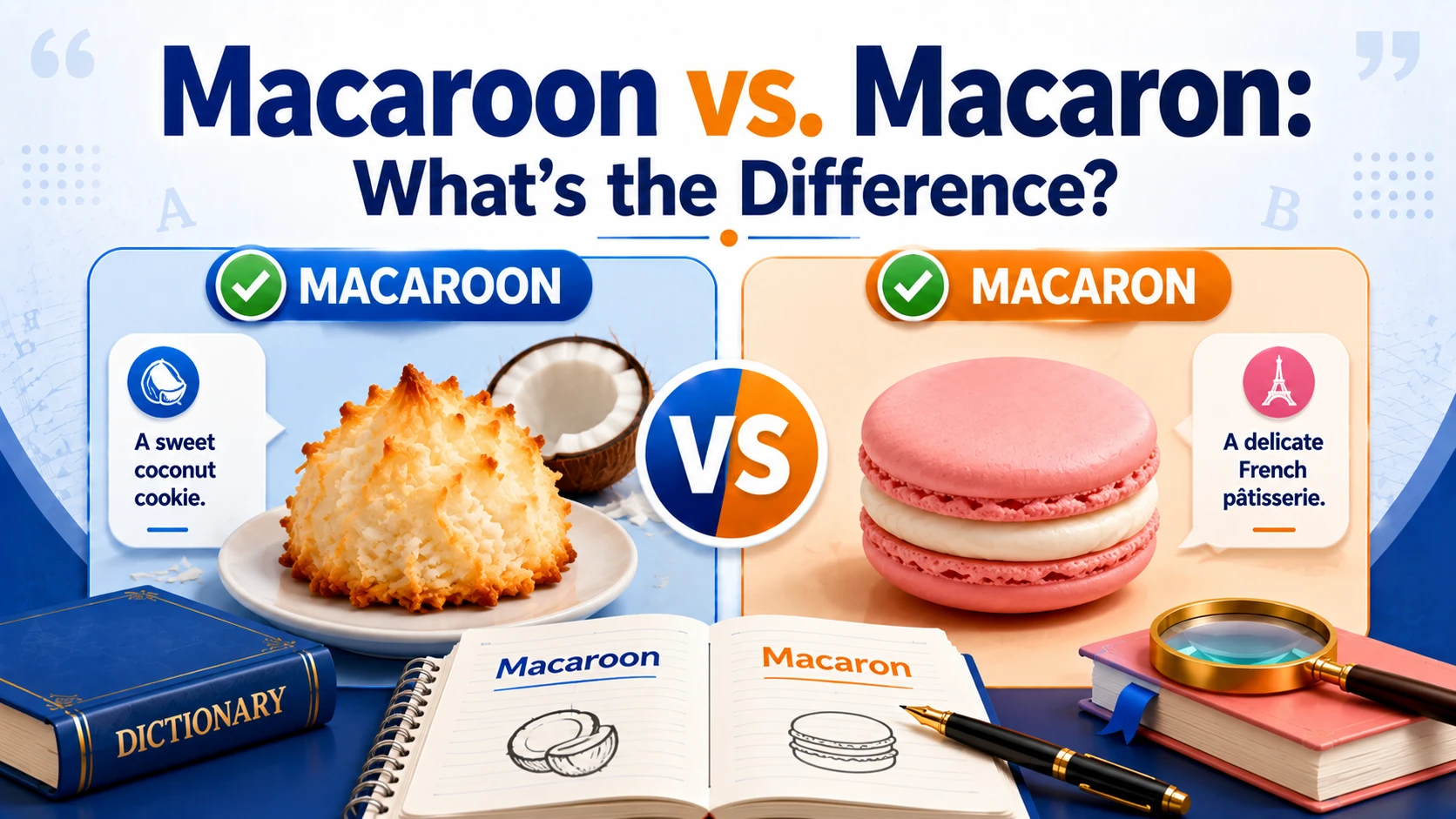
Macaroon vs. Macaron: What’s the Difference?

Macaroon vs. Macaron: What’s the Difference?

Macaroon vs. macaron looks like a tiny spelling difference, but the two words usually refer to two distinctly different cookies. A macaroon is typically a chewy, coconut-based cookie, often shaped into a rough mound and sometimes dipped in chocolate. A macaron, by contrast, is a delicate sandwich cookie made from almond flour, egg whites, and … Read more
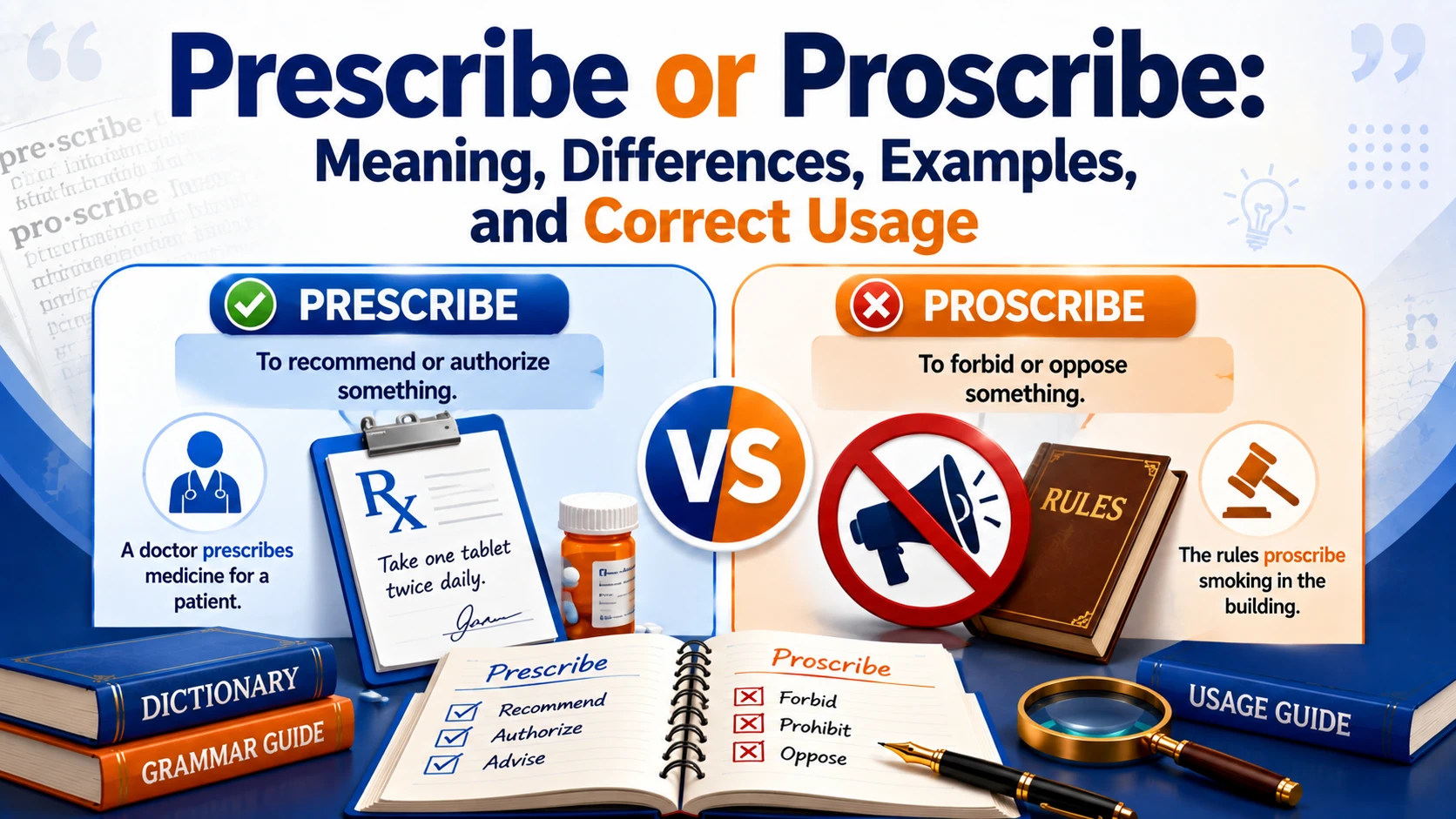
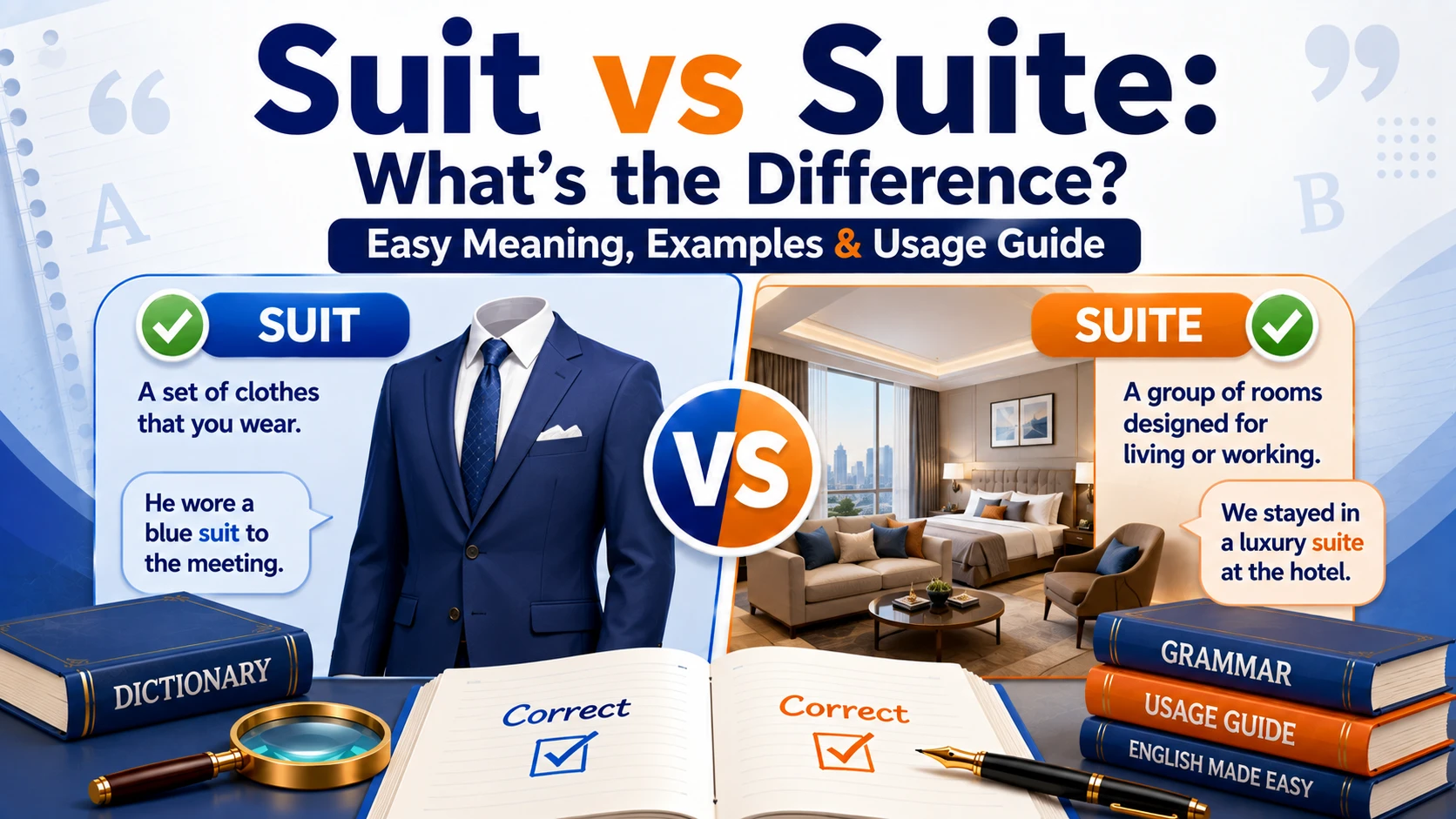
Prescribe or Proscribe: Meaning, Differences, Examples, and Correct Usage

Prescribe or Proscribe: Meaning, Differences, Examples, and Correct Usage

Prescribe or proscribe can be surprisingly difficult to distinguish because the two verbs look similar, sound similar, and share the same Latin root related to writing. Yet their meanings move in very different directions. Prescribe means to recommend, order, or officially specify what should be done. Proscribe means to officially forbid or ban something. One … Read more

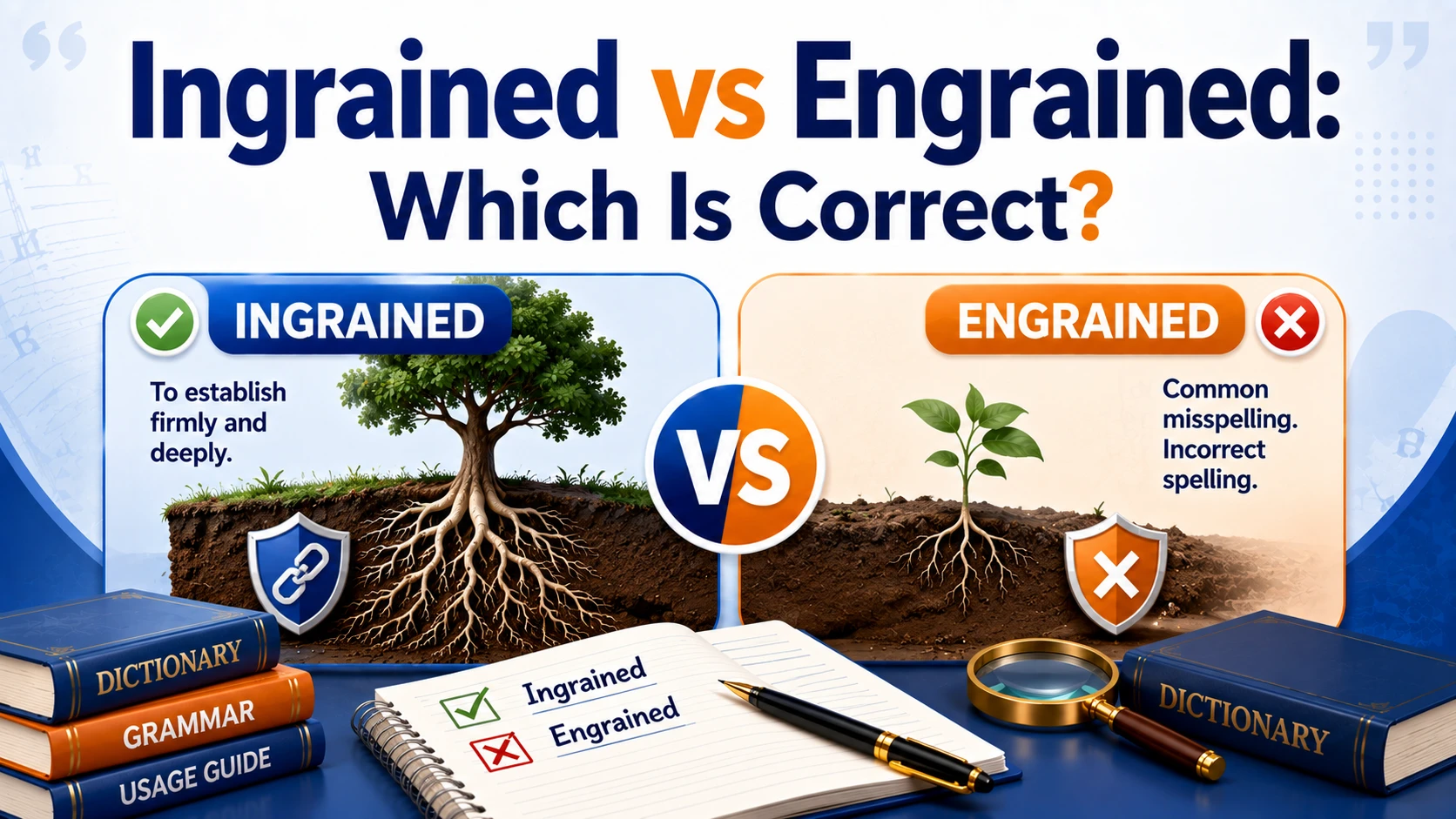
Ingrained vs Engrained: Which Is Correct?

Ingrained vs Engrained: Which Is Correct?

Ingrained vs engrained is a spelling comparison that causes confusion because both forms appear in dictionaries and real-world writing. For most modern English writing, ingrained is the better default. It describes something that has become deeply established, difficult to change, or deeply embedded, whether you’re talking about a habit, belief, attitude, behavior, or even dirt. … Read more

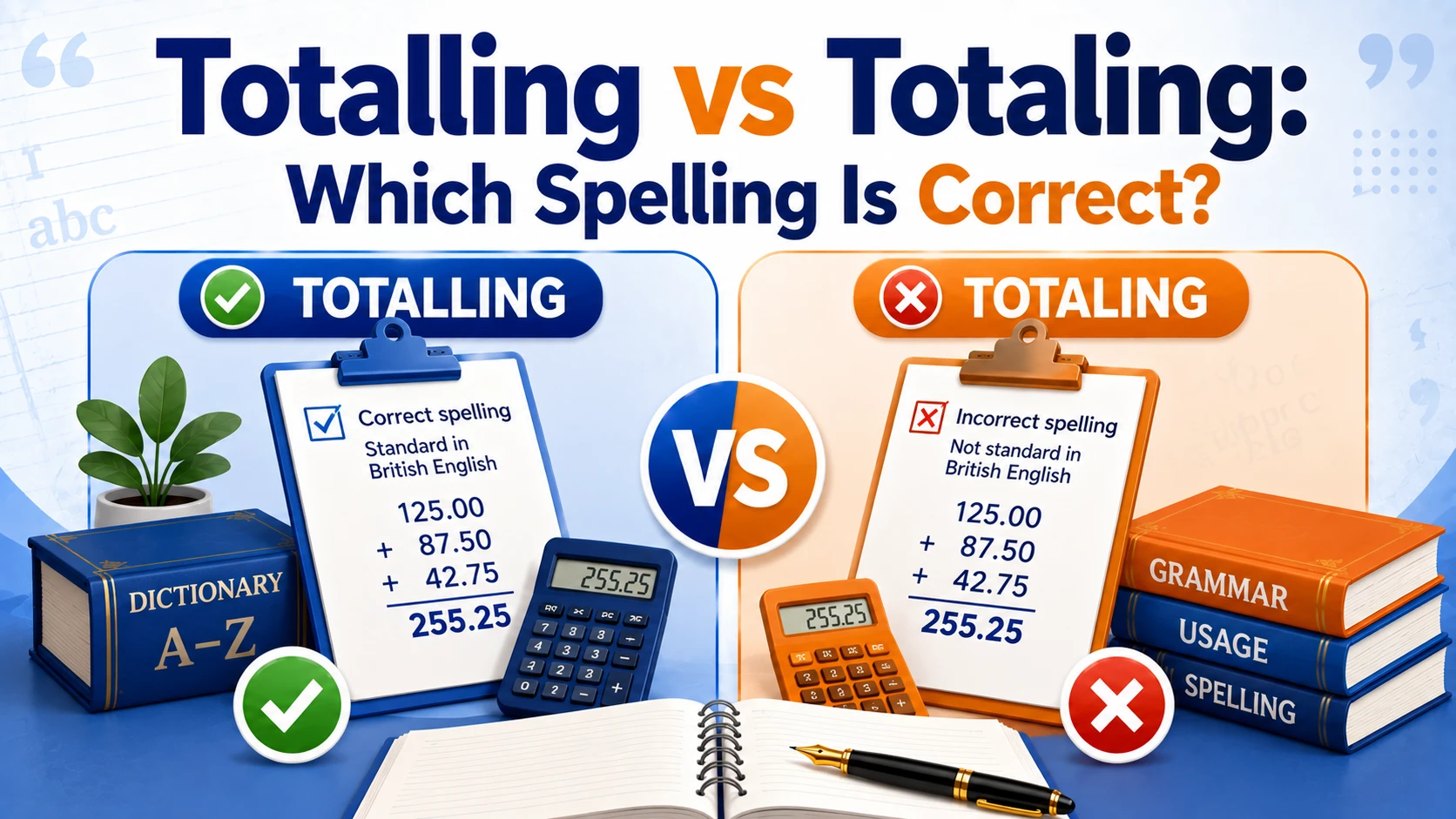
Totalling vs Totaling: Which Spelling Is Correct?

Totalling vs Totaling: Which Spelling Is Correct?

Totalling vs totaling are two spellings of the same verb form, and the difference is mainly a matter of regional English rather than meaning. If you write American English, totaling with one l is the standard choice. If you write British English, totalling with two l’s is standard. Neither spelling is inherently wrong. This small … Read more

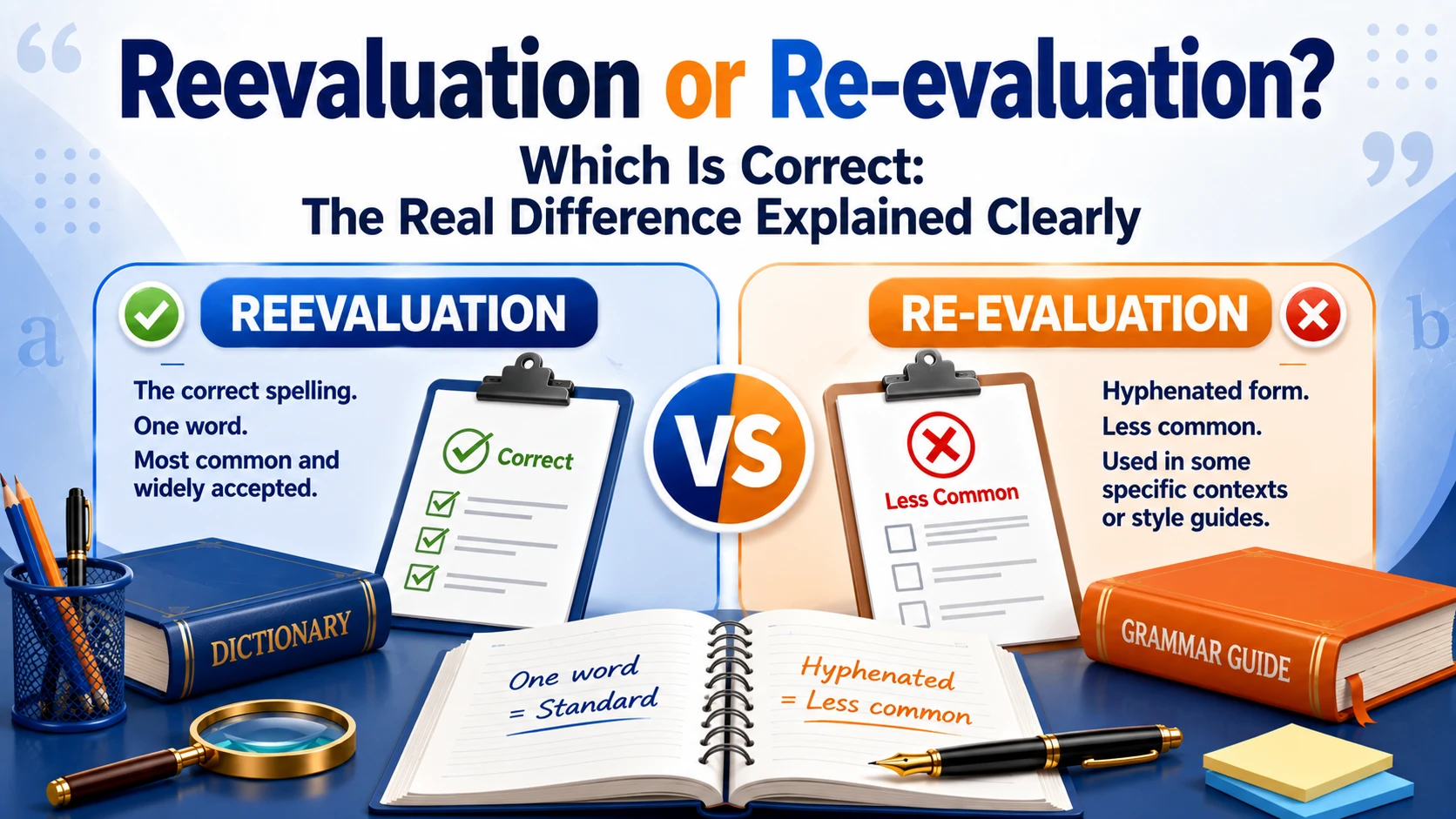
Reevaluation or Re-evaluation? Which Is Correct: The Real Difference Explained Clearly

Reevaluation or Re-evaluation? Which Is Correct: The Real Difference Explained Clearly

Reevaluation or re-evaluation are two spellings of the same noun, and the difference is mainly one of hyphenation, not meaning. In modern American English, reevaluation is generally the better default because the closed form is well established. Re-evaluation is also a legitimate spelling and remains common in some dictionaries, style systems, and varieties of English. … Read more

Apposed vs Opposed: Difference Explained with Examples

Apposed vs Opposed: Difference Explained with Examples

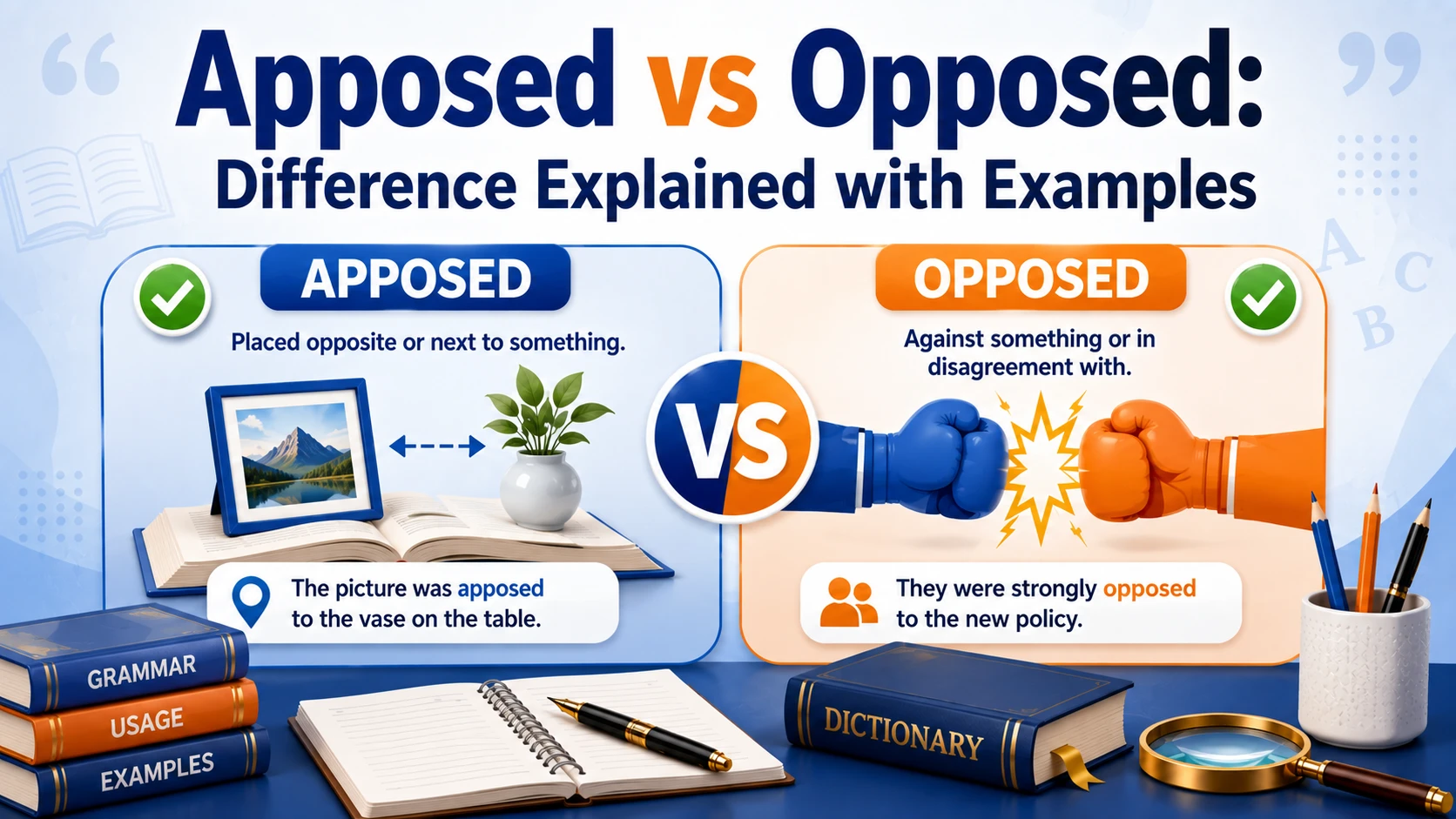
Apposed vs opposed can look like two spellings of the same word at first glance. They aren’t. Apposed is a specialized word that generally describes things placed side by side or brought into close contact. Opposed is much more common and usually means against, resistant to, or in disagreement with something. The difference becomes especially … Read more

Unorganized vs Disorganized – Understanding the Key Differences

Unorganized vs Disorganized – Understanding the Key Differences

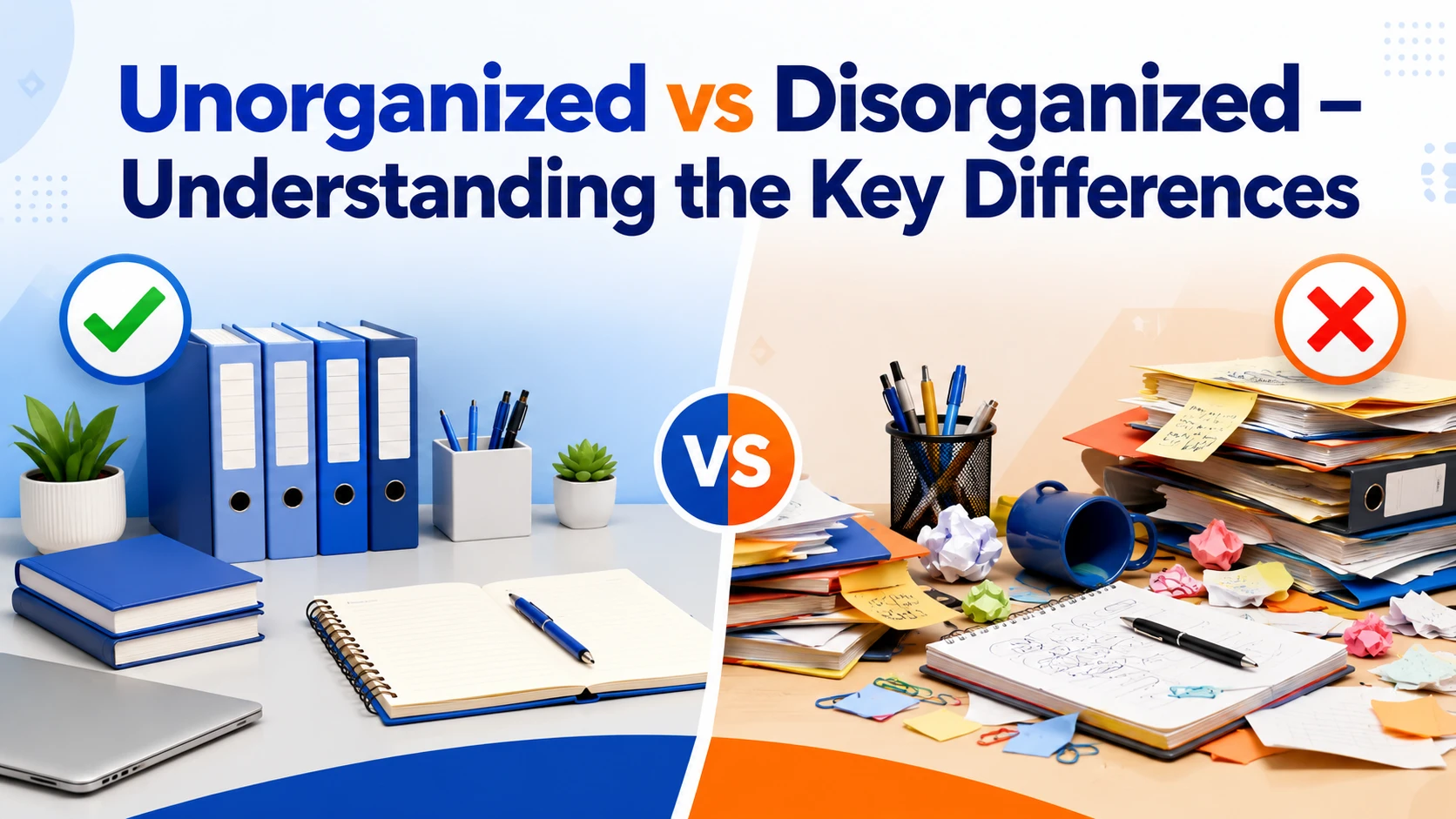
Unorganized vs disorganized can be confusing because both words describe a lack of order or organization. In everyday English, they sometimes overlap, but they can carry slightly different meanings depending on context. Unorganized usually emphasizes that something lacks an organized structure or system, while disorganized often suggests disorder, poor planning, confusion, or ineffective organization. Knowing … Read more